What we offer
Quantum bit covers the span from a line of production code to a machined prototype. Clients typically engage us for one of the four practices below; in longer relationships they draw on several at once.
Product engineering that survives contact with real users
We build and maintain production software: services and APIs, web front-ends, mobile applications, data pipelines and the integrations that hold them together. We work the way a good internal team works — version control discipline, code review, CI, tests, and someone accountable for the release.
Backend & platform
- APIs and service architecture
- Databases, caching and messaging
- Cloud infrastructure and CI/CD
- Performance and cost tuning
Web & mobile
- Modern JavaScript/TypeScript front-ends
- iOS and Android applications
- Accessibility and responsive design
- App Store and Play Store release work
Embedded & systems
- Firmware for custom hardware
- Signal processing and RF software
- Device-to-cloud telemetry
- Low-level debugging and instrumentation
Senior engineers, sourced and vetted by engineers
This is the practice the company was founded on. We recruit from the Split and wider Dalmatian talent pool — a market that has been supplying engineers to American companies since the late 2000s — and place them into client teams, either as direct hires or as long-term contractors carried by Quantum bit.
Candidates are interviewed by people who have shipped the same kind of system. We would rather send you three credible profiles than thirty keyword matches.
Engineers embedded in your team, on your tooling, in your stand-ups, reporting to your leads. Contracting, payroll, compliance and local employment law stay on our side.
A complete squad — engineers, a QA lead and a delivery manager — owning a product area end to end, with a single point of contact on our side.
Where a client wants people on their own books, we run the search and hand over the hire.
Central European Time gives a working overlap with the US East Coast every afternoon, and a full shared day with European clients.
Keeping distributed delivery predictable
Remote engineering fails on communication far more often than on competence. We supply the people whose job is to prevent that.
Project & delivery management
Scoping, estimation and backlog work; sprint and release planning; risk and dependency tracking; status reporting a stakeholder can actually read.
- Agile, Scrum and Kanban delivery
- Roadmap and milestone planning
- Vendor and multi-team coordination
- Documentation and hand-over
Quality assurance
Test strategy, manual and automated coverage, and release gates that catch problems before your users do.
- Functional and regression testing
- Test automation and CI integration
- API, performance and load testing
- Mobile device and cross-browser coverage
From schematic to a part you can hold
Not every problem is solved in software. We take on general engineering work that combines electronics and programming with mechanical design and in-house fabrication — the capability behind our own R&D programmes, offered to clients on the same terms.
Electronics & firmware
- Schematic capture and PCB layout
- Sensor, RF and power subsystems
- Microcontroller firmware
- Bring-up, bench testing and debugging
CAD & mechanical design
- 3D modelling of enclosures and mounts
- Design for manufacture and assembly
- Tolerance and fit analysis
- Technical drawings for production
Rapid prototyping
- FDM and resin 3D printing
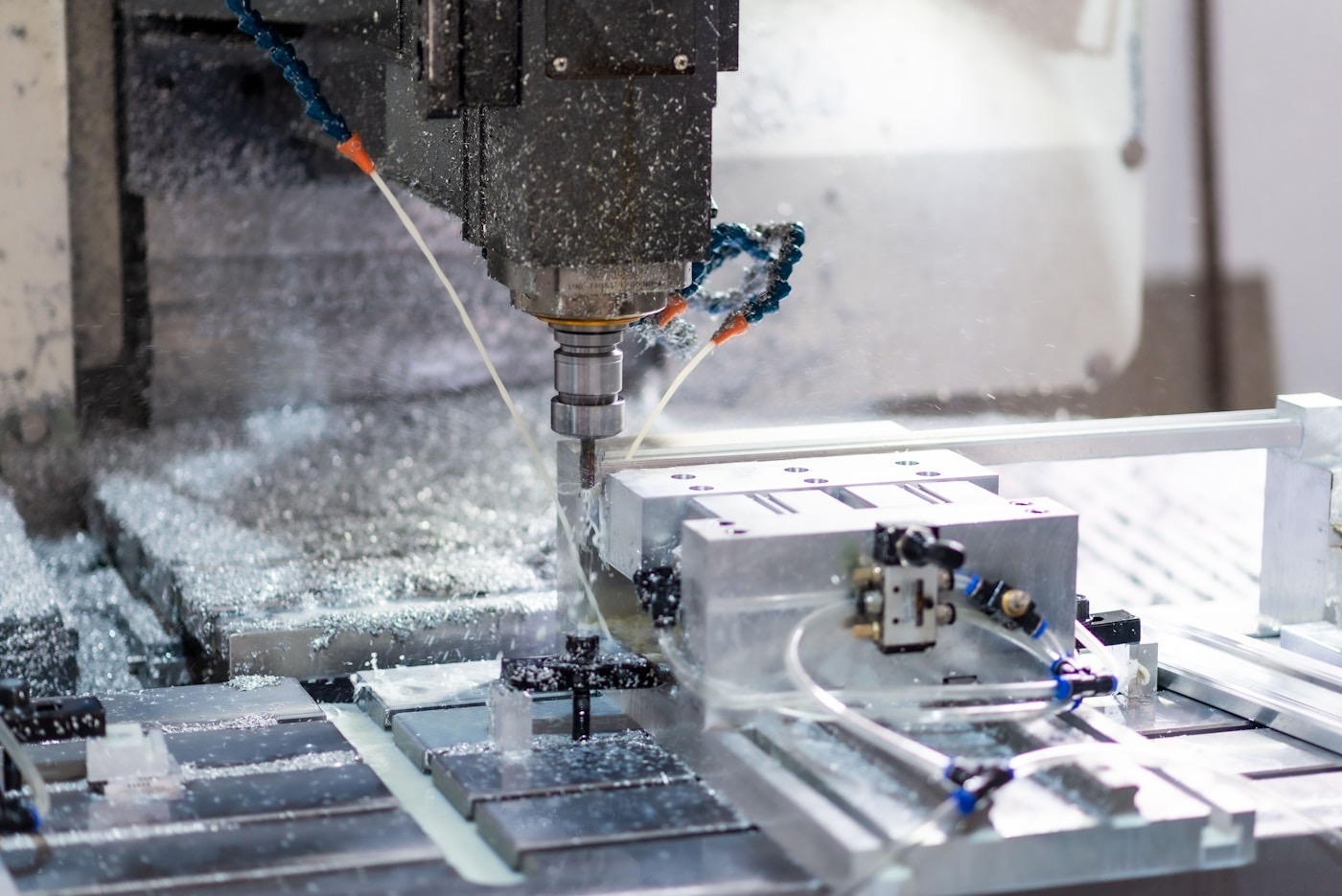
- CNC machining of metal and plastic
- Iterative fit-and-function prototypes
- Small-batch production parts
How a prototype programme usually runs
We start with the constraint that actually matters — size, power, range, cost, certification — and work outward. Electronics and mechanical design proceed together so the board and the enclosure are never designed in ignorance of each other, and parts come off our own printers and CNC in days rather than weeks. Firmware and host software are written against real hardware from the first revision.
You end up with a prototype that has been measured rather than simulated, and a documentation set another manufacturer could pick up.
Which of these do you need?
Describe the problem and we will tell you which practice fits, roughly what it costs, and whether we are the right firm for it.